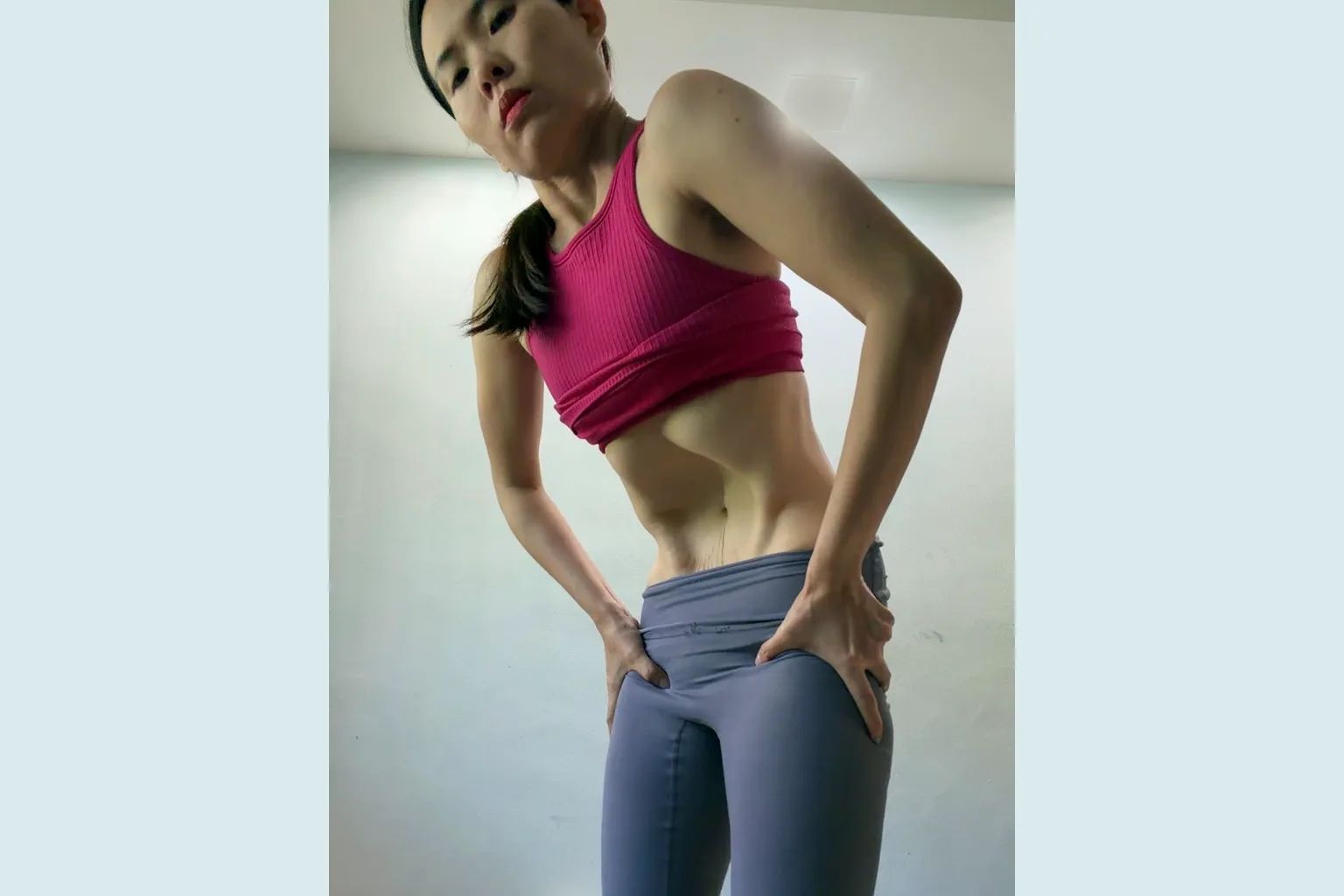
Nauli kriya is a yoga cleansing practice in which the muscles at the front of the abdomen are isolated and moved while the breath is held after a full exhale. It trains voluntary control of the abdominal wall, and it is learned in stages because each stage rests on the one before it.
Search for how to do nauli and you will mostly find short clips of a belly rolling from side to side. The roll is the last stage of a sequence, and it only works once the earlier stages are under control. This article covers what Nauli trains and who should not practise it, then how Dr. Jacqueline Yun of Inner Heal Transformation teaches it. For the approach behind her teaching, start with the therapeutic yoga pain relief guide.
In short
- Nauli kriya is one of six traditional cleansing practices in Hatha Yoga, described in the Hatha Yoga Pradipika.
- Mechanically, it builds isolated control of the rectus abdominis on top of a full exhale and an abdominal vacuum under the ribs (uddiyana bandha).
- It trains control of the abdominal wall and awareness on a breath hold. Research on Nauli itself is thin.
- It is learned in stages, on an empty stomach, with a teacher who can watch you.
- Dr. Yun's list of who should avoid it includes anyone pregnant and anyone with a cardiovascular condition.
What is nauli kriya?
Nauli is one of the shatkarma, the six cleansing practices of Hatha Yoga, which are also called shatkriya. The Hatha Yoga Pradipika, a text dated to around the 15th century, lists the six actions in its second chapter and gives Nauli two verses. Verse 33 describes the belly being moved from left to right with force. Verse 34 says Nauli removes dyspepsia and increases appetite and digestion.
Those are the tradition's claims. Traditional descriptions also say the circular movement of the abdominal muscles massages the internal organs. This article reports both as tradition, and neither is presented here as a proven effect.
What does nauli kriya train?
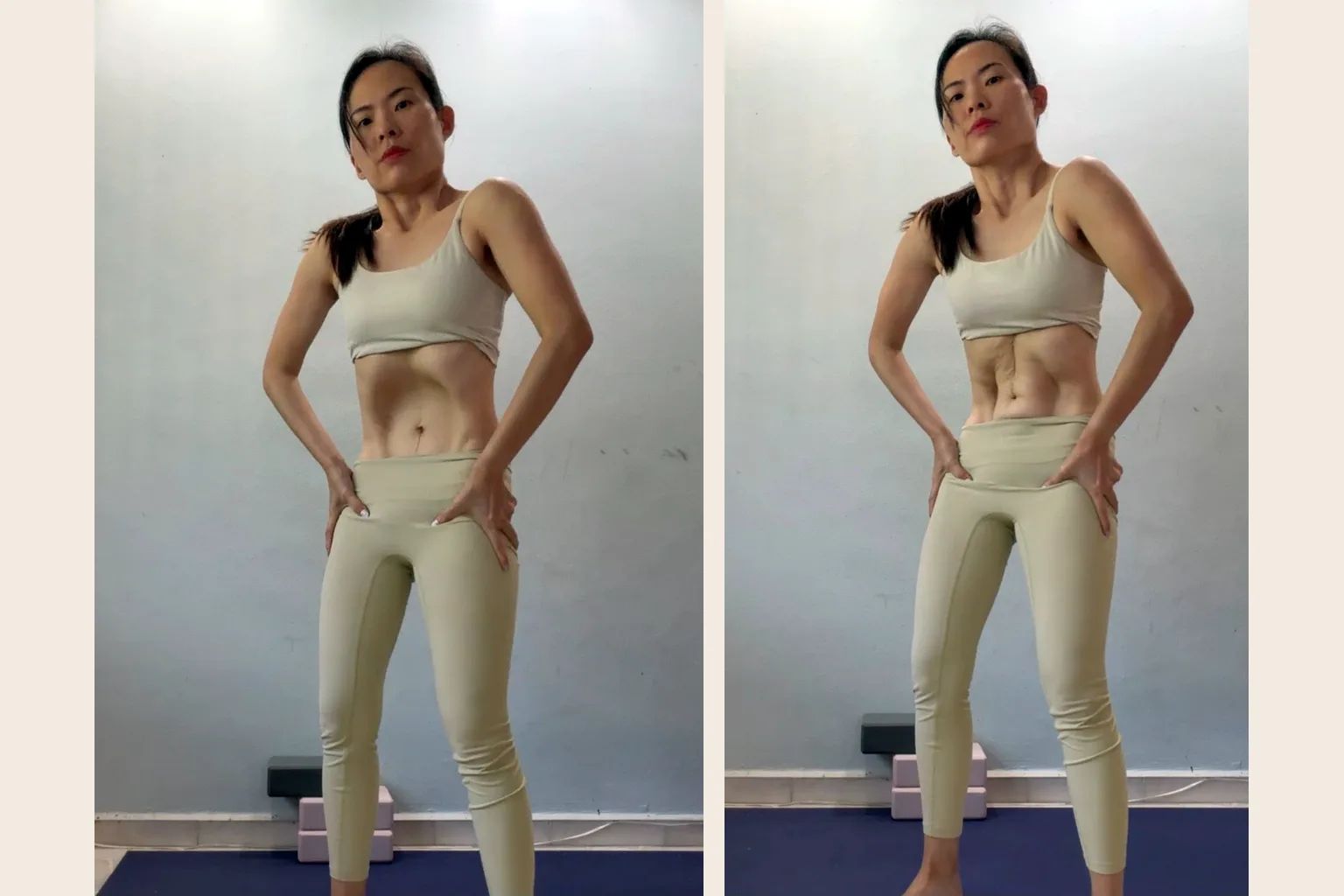
The sequence starts with a full exhale. With the lungs empty, the abdomen is drawn in and up beneath the lower ribs, as if breathing in without letting any air enter. That is uddiyana bandha, the abdominal vacuum. From there the rectus abdominis, the paired vertical muscle along the front of the abdomen, is switched on by itself, so a single central column stands out. This is madhyama nauli. Doing it on the left only (vama) or the right only (dakshina), then alternating sides in sequence, produces the rolling that people recognise.
Read as mechanism, this is a coordination task. The abdominal wall is layered, with the rectus at the front and the obliques and the deeper transversus wrapping around beneath it. Most abdominal exercises recruit these layers together. Nauli asks one layer to work while the layers beneath it stay relaxed. Drawing the abdomen in is the easy part, and holding one vertical band while the rest stays soft takes the practice.
What it trains comes down to three things.
- Voluntary control of the abdominal wall. The ability to switch one part on and keep its neighbours off.
- Awareness on a breath hold. Holding the breath out, without straining, while attention stays on the abdomen.
- Separation of the rectus from the deeper wall. Learning to feel the front muscle as its own unit rather than as part of a single brace.
Control and awareness are the claims this article makes for Nauli.
Is there research on nauli kriya?
Very little, and it helps to know exactly how little. A 2021 narrative review of shatkarma screened 723 references and included 37 articles. It found scientific studies on four of the six techniques, and Nauli is not among the four its abstract discusses. The authors call the evidence limited and ask for larger trials. A 2025 historical review adds that the first research published in the journal founded in 1924 by Swami Kuvalayananda was an X-ray experiment on Nauli. That is a historical note and not a trial of benefits.
The nearest measurements come from related practices. A 2022 ultrasound study of 12 healthy volunteers found more blood flow in the superior mesenteric artery after agnisara, an exercise of the front abdominal wall muscles, was performed 100 times. It measured blood flow and no health outcome, and agnisara is not Nauli. A 2025 crossover study of 30 healthy students found co-activation of sympathetic and parasympathetic activity during uddiyana bandha. Diastolic blood pressure rose immediately afterwards and returned to normal within 10 minutes. The authors said the mixed pattern made a conclusion difficult.
Searches for nauli benefits return many confident claims. None of this research shows that Nauli changes body fat or detoxifies the body, so claims like that go beyond the evidence. What the studies do support is care. One uddiyana session moved diastolic pressure briefly in healthy students, which is consistent with a cardiovascular condition being on Dr. Yun's list below. A thin evidence base is a reason to approach Nauli as a skill built with feedback.
How is nauli kriya learned in stages?
The progression below is the standard order. It is described so the shape of the practice is clear, and the stages themselves are for learning with a teacher.
- Agnisara. Repeated drawing in and releasing of the abdomen while the breath is held out. It builds the first sense of moving the front wall on command.
- Uddiyana bandha. The abdominal vacuum under the ribs on a false inhale. It draws the wall in and sets up the isolation that follows.
- Madhyama nauli. The central rectus alone, with the sides relaxed.
- Vama and dakshina nauli. One side at a time, left and then right.
- Rolling. Left and right in a smooth sequence.
Each stage is practised on an empty stomach, in the morning, and each is added only when the one before it is under control. Skipping ahead to the roll hides any weakness in the stages beneath it.
The stages involve a held breath, and the muscle being isolated is one you cannot see. A teacher can watch the neck and the ribs for strain, and can tell whether the abdominal wall is drawing in or the chest is simply lifting. Online, Dr. Yun watches your practice through the camera. Dizziness or chest discomfort is a signal to stop and release the breath.
How does nauli compare with crunches?
Nauli and abdominal strength exercises train different qualities, and the table sets out what each one trains.
| Practice | What it trains | Breath | Best for |
|---|---|---|---|
| Nauli kriya | Voluntary isolation of the rectus abdominis, its separation from the deeper wall, and awareness on a breath hold | Held after a full exhale | Learning fine control of the abdominal wall with a teacher |
| Crunches and sit-ups | Trunk flexion against body weight, with the abdominal muscles working together | Usually continuous | Building strength in a movement the trunk performs under load |
| Plank | Holding the trunk steady against gravity | Usually continuous | Training the abdominal wall to hold a position |
Control and strength are different qualities, and a strong abdominal wall is not automatically a controllable one. If you came here because of back pain, why core exercises don't stop back pain sets out where abdominal work fits and where it does not.
Who should not do nauli kriya?
This is Dr. Yun's list of who should avoid Nauli.
- Pregnant women
- Postpartum women, if less than 3 months after delivery or not yet fully recovered
- During menstruation
- People with a cardiovascular condition, for example high blood pressure
- People with a gastrointestinal or internal organ issue
For postpartum, Dr. Yun adds the following, and how long after birth you can start yoga covers the wider timeline.
- 3 months after a vaginal delivery
- 4 to 6 months after a caesarean section. If there is still pain, wait until you are fully recovered, even if that is after 6 months.
- Diastasis recti needs to heal before you start practising. The diastasis recti guide explains the self-check.
Several items on this list are about timing, and you can come back to Nauli when the timing is right. If you are unsure whether any of it applies to you, ask your doctor first.
How can I learn nauli kriya with Dr. Yun?
Dr. Jacqueline Yun holds a PhD in Mechanical Engineering from NTU and is an E-RYT 200 teacher. At Inner Heal she runs a guided workshop called Nauli 陪跑营. 陪跑 means she trains alongside you, and online she watches your practice through the camera. Nauli is not one of the elements in her three-element framework, so it is a separate practice with its own stages.
The price is S$58. It runs online, and a 1-to-1 format is available. The next intake is in mid-January, with dates to be announced.
If you would like to learn Nauli properly, with someone watching and the stages in order, you are welcome to register your interest.
Frequently asked questions
Is nauli kriya safe?
It depends on who is practising and how it is learned. Nauli involves a breath hold, and Dr. Yun's list above names the groups who should avoid it. No study reviewed here tests the safety of Nauli itself, so it is learned in stages with feedback, and anyone with a health condition should ask their doctor first.
Can I learn nauli from a video?
A video shows the outcome, a belly rolling, and cannot show what happened in the stages before it. The muscle being isolated is hard to feel, and a held breath is where strain can hide, so feedback from someone who can see you matters. Online, Dr. Yun watches through the camera.
Can I do nauli kriya after giving birth?
Only after the timing on Dr. Yun's list. That means 3 months after a vaginal delivery or 4 to 6 months after a caesarean section, with full recovery and any diastasis recti healed first. The diastasis recti guide and the piece on how long after birth to start yoga cover both.
Does nauli kriya help with digestion or weight loss?
The Hatha Yoga Pradipika credits Nauli with improving digestion, and that is a traditional claim. The research on Nauli itself is thin, and this article makes no promises about digestion or body weight. What Nauli trains is control of the abdominal wall.
Sources
- Hatha Yoga Pradipika, chapter 2 (verses 22, 33 and 34), English translation on Wisdom Library. The page does not name the translator and dates the text to around the 15th century.
- Swathi PS, Raghavendra BR, Saoji AA. Health and therapeutic benefits of Shatkarma: a narrative review of scientific studies. Journal of Ayurveda and Integrative Medicine, 2021. PMID 33454186.
- Dallaghan P, Tiwari S. A review of the earliest scientific studies on yoga and the birth of yoga therapy in 1924. International Journal of Yoga Therapy, 2025. PMID 40359248.
- Minvaleev RS et al. Yogic agnisara increases blood flow in the superior mesenteric artery. Journal of Bodywork and Movement Therapies, 2022. PMID 35710229.
- Nataesh SR et al. Immediate effects of Uddiyana bandha on blood pressure and heart rate variability in healthy individuals, a randomized crossover study. Journal of Bodywork and Movement Therapies, 2025. PMID 41316586.
- Wikipedia, Nauli, last edited 15 August 2025, for the general description of the stages and the traditional claim about massaging the internal organs.